
Hall of Fame: Sustainability statements in the railway transportation sector
As the summer holiday season approaches, it’s an ideal time to reflect on sustainable travel. Rail is one of the lowest-emission modes of mass transport, positioning the sector as a key player in the transition to low-carbon mobility. In this edition of the Hall of Fame, we explore sustainability statements published by companies in the European railway transportation industry.
Our evaluation focuses on three key criteria:
- Double Materiality Assessments (DMA) – including how dependencies are addressed, alignment with the ESRS topic list for naming impacts, clarity on process versus outcome, optimal number and relevance of IROs (too many or too few), and the balance between impacts, risks and opportunities.
- Communication & visuals – covering the effective use of tables, charts, and diagrams, quality of language, overall flow, and storytelling.
- Navigation & structure – including how the sustainability statement is organised and laid out, such as the use of tabs, and how clearly it links to the ESRS requirements.
DSB
Double Materiality Assessment ★★★☆☆ (3/5)
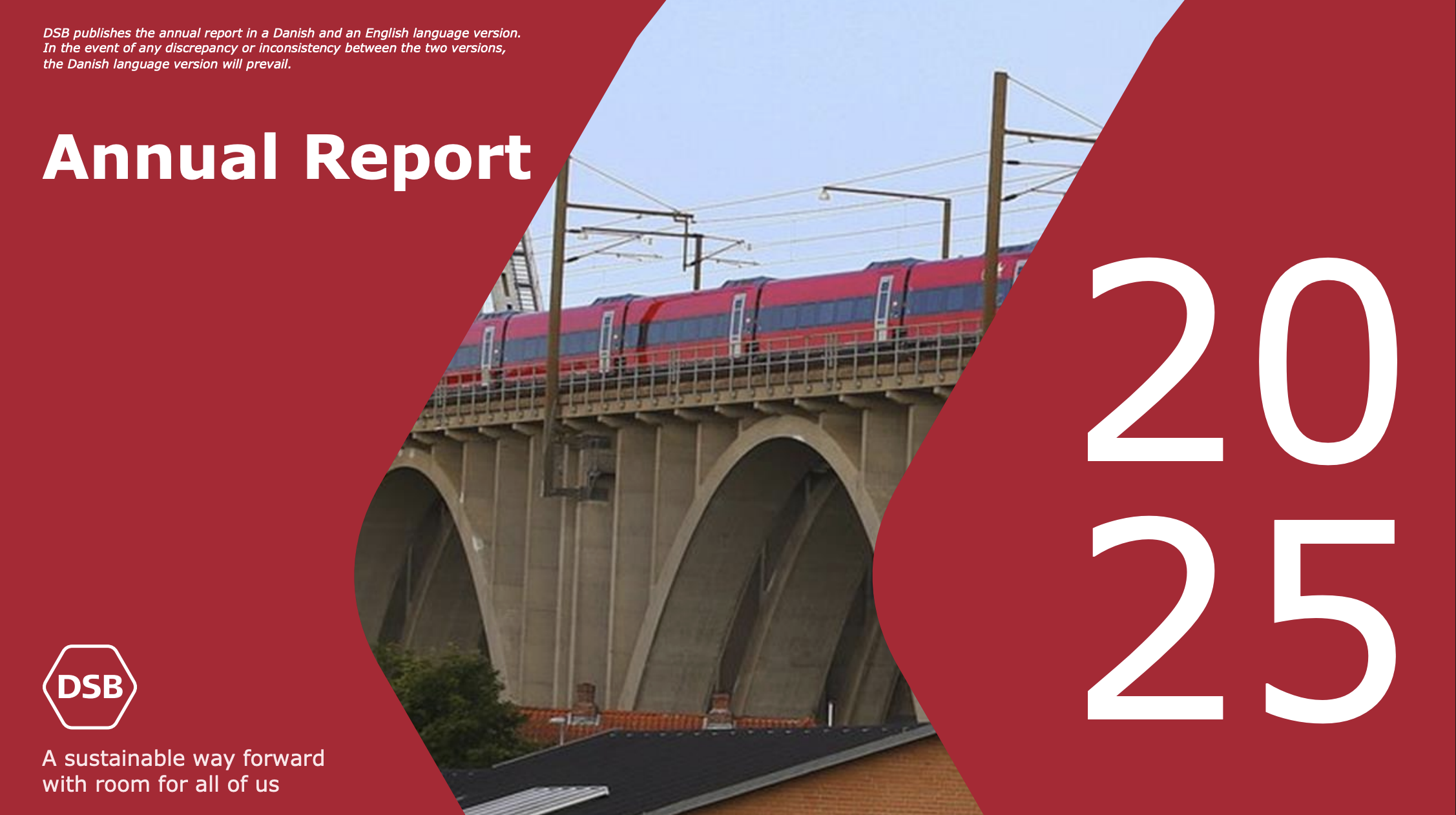
DSB provides a clear description of its DMA process, though the report doesn’t give the full picture of the process. More specifically, it was not clear whether risks and opportunities were scored separately, and the process comprised only two steps — shorter than an average DMA process. Given that a standard DMA process usually follows a more comprehensive, multi-step approach, it would be helpful to clarify whether any key phases were combined or if additional assessment steps are planned to ensure full coverage. On the positive side, the report clearly distinguishes which topics became material compared to the previous year's assessment and which were excluded. However, the reasoning suggests that some excluded topics were assessed on a net basis rather than gross, which is not in line with ESRS requirements. The DMA identified 17 material topics, focused and relevant to the industry. A notable gap is the absence of material opportunities — only impacts and risks were identified — and dependencies were not considered as part of the process.
Communication & visuals ★★★★☆ (4/5)
The report's visual presentation is basic however, the use of nice imagery adds a nice touch. More engaging graphics, colour and creative elements would make the sustainability statement more compelling to read. That said, the design is consistent with the company's brand identity, and the language is a clear strength: accessible, jargon-free and easy to follow.
Navigation & structure ★★★★☆ (4/5)
The sustainability statement is well organised, with a navigation tab at the top of the page allowing readers to move between general information, environment, social and governance sections with ease. Placing the sustainability statement as a separate section within the management report aligns with ESRS recommendations. The inclusion of ESRS tags throughout also makes it straightforward to locate information relevant to specific disclosure requirements.

VR Group
Double Materiality Assessment ★★★★☆ (4/5)
VR Group's DMA coverage is thorough. The report walks through each step of the process in detail. Impact materiality and financial materiality (for risks and opportunities) are clearly distinguished as separate steps, which shows that the company took the right approach. Another key strength is that VR Group updated its DMA methodology in 2025 to ensure severity takes precedence over likelihood when scoring negative human rights risks. The DMA section does include some details that are unnecessary — such as definitions of scale, scope and irremediability. It also falls short because dependencies were not considered in the process. With 12 material sub-topics and between one and three material IROs per topic, the outcome results in a number of IROs which is manageable and sector-relevant.
Communication & visuals ★★★☆☆ (3/5)
The sustainability statement is designed modestly, and there is room to enhance it with more visual elements. Interestingly, the business review section of the same report, outside the sustainability statement, is designed creatively and some of these elements and style could have been implemented for the sustainability section. In terms of content, some repetition could have been avoided, particularly in the information on physical and climate risks. The use language is generally good, though more concise writing would improve the overall reading experience.
Navigation & structure ★★★★☆ (4/5)
The report features a side navigation pane that allows readers to move between sections efficiently. The sustainability statement is organised by E, S and G, with specific topics within each theme, and the structure is consistent throughout — covering policies, actions, targets and metrics for each, with methodological context where needed. The main shortcoming is the absence of ESRS tags, which makes it harder to link disclosures to specific regulatory requirements.
SNCF Group
Double Materiality Assessment ★★★☆☆ (3/5)
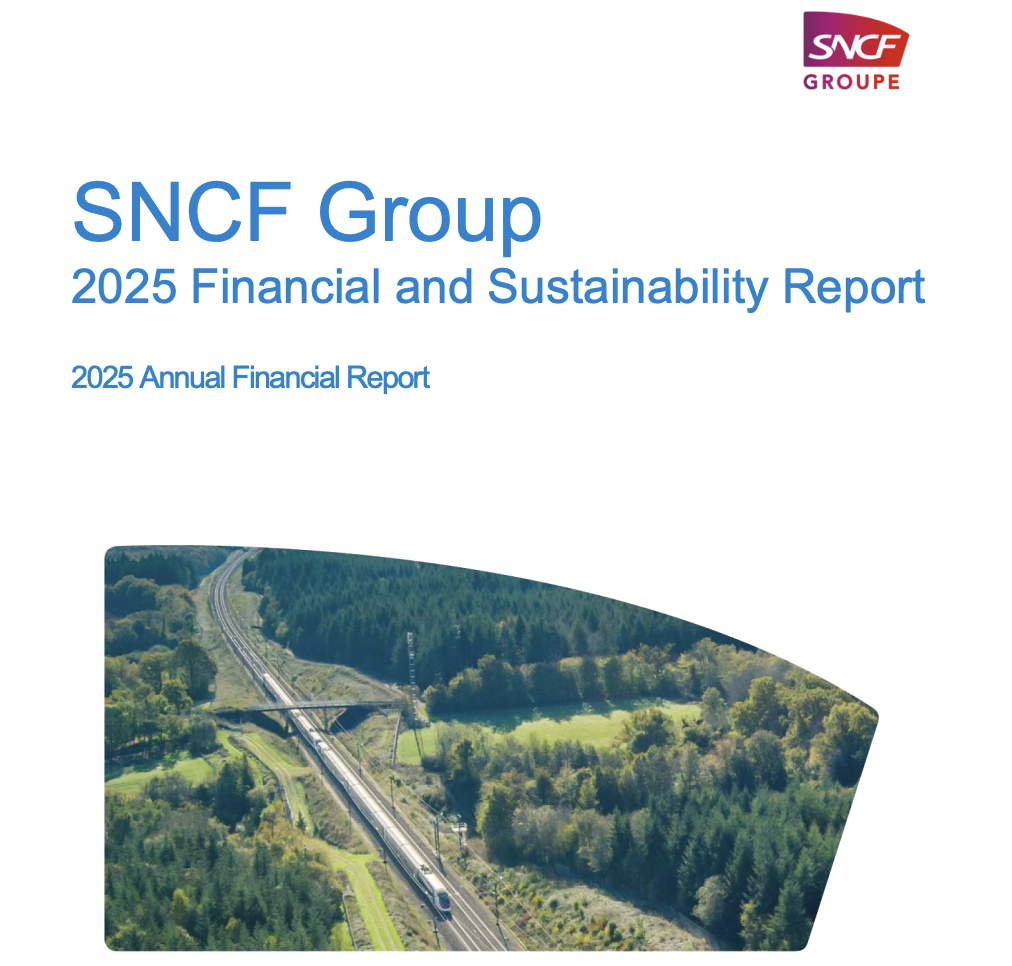
SNCF describes its DMA process in considerable detail. The emphasis falls heavily on explaining the process itself, going well beyond what the ESRS requires. Dependencies are not included in the DMA approach, though they do feature in the biodiversity impact assessment. The 16 material topics identified, each with between one and three IROs, represents a high number to manage in practice. On the positive side, the result includes a balanced mix of impacts, risks and opportunities.
Communication & visuals ★★☆☆☆ (2/5)
The sustainability statement is text-heavy. Creative and visual elements are largely absent, and a line-spacing issue within paragraphs makes the pages harder to read than they should be. The language flow could also be improved — information often feels fragmented, and sections lack clear connections to one another. A more concise approach would help communicate the relevant information more effectively.
Navigation & structure ★★☆☆☆ (2/5)
Navigation presents the most significant challenge in SNCF's statement. There is no top-of-page navigation tab to help readers move across the document, ESRS tagging is absent, and the overall structure feels congested — a result of insufficient white space and page breaks. The result is a statement that is difficult to navigate and, at times, overwhelming to read.
Get comfortable, there’s more
If you enjoyed this article, there's plenty more media to get your mind into.


Sign up to our newsletter
and we'll report back to you with industry news and updates you'll actually want to know.